Documentation, Analysis, Visualization
.jpeg)

CLOSE-UP & MACRO EVIDENCE PHOTOGRAPHY COURSE OBJECTIVES:
This course provides forensic professionals with practical techniques for documenting small and microscopic evidence with accuracy and consistency. You will learn how to capture high-quality close-up and macro images in both field and laboratory environments using proper camera settings, specialized macro equipment, controlled lighting, focus stacking, and image calibration.
This is a 100% online certificate course with live instruction that includes a test and two assignments. Recordings will be available for two weeks after the course.
WHY IS CLOSE-UP EVIDENCE PHOTOGRAPHY SO CHALLENGING?
SMALL SUBJECTS,
BIG CONSEQUENCES
Tiny details such as toolmarks, fingerprints, trace evidence, and injuries can be critical to the investigation
LIMITED
DEPTH OF FIELD
Only a thin portion of the subject may be in focus, making accurate documentation difficult.
NEED FOR DEFENSIBLE
PROCEDURES
Improper lighting, scale placement, or post-processing can compromise evidential value.
THIS COURSE TEACHES PRACTICAL TECHNIQUES FOR CAPTURING SMALL EVIDENCE WITH MAXIMUM DETAIL AND DEFENSIBLE ACCURACY
WHO THIS COURSE IS FOR?
✓ Crime Scene Investigators
✓ Forensic Photographers
✓ Laboratory Analysts
✓ Firearms and Toolmark Examiners
✓ Latent Print Examiners
✓ Medical and Death Investigators
✓ Forensic Science Students
KEY LEARNING POINTS
-
Best practices for close-up and macro evidence photography in field and laboratory settings.
-
Selection and use of macro lenses, extension tubes, reversing rings, and other accessories.
-
Focus stacking techniques to maximize depth of field.
-
Proper use of camera supports, scales, and controlled lighting.
-
Image calibration and accurate measurement workflows.
-
Post-processing techniques using Helicon Focus and Adobe Photoshop.
-
Application of SWGIT and OSAC standards to forensic photography.
EQUIPMENT REcommendations
camera
-
DSLR or mirrorless camera with manual controls.
-
Macro lens (recommended) or extension tubes.
Accessories
-
Tripod or copy stand.
-
External flash or continuous lighting.
-
Scale and 18% gray card.
-
Computer capable of running:
-
Helicon Focus (free trial available)
-
Adobe Photoshop (free trial available)
-
Learn to Capture the Smallest Details with Maximum Evidential Value

Instructor
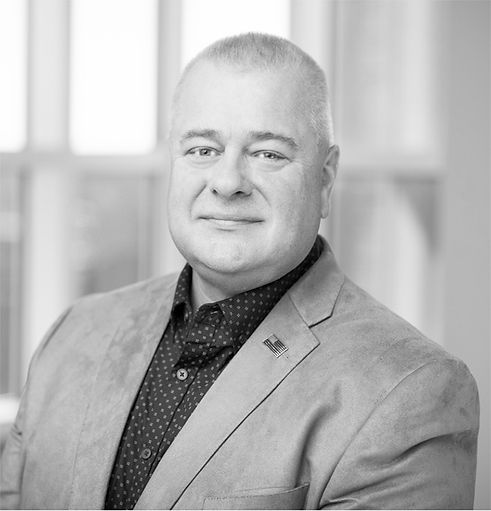
Jerry Narowski
Forensic Photography Specialist
Jerry Narowski recently retired as Chief of Police for the Derby Police Department (CT), concluding a 36-year law enforcement career. With over a decade in the Detective Division, where he rose to Commanding Officer, Jerry managed all death investigations and crime scenes and was recognized as a Senior Crime Scene Analyst in Connecticut.
Since 2001, he has served on the faculty of the University of New Haven's ForensicScience Department. His expertise spans forensic photography, image processing, crime scenereconstruction, and latent fingerprint analysis